Importance of Situational Fitting
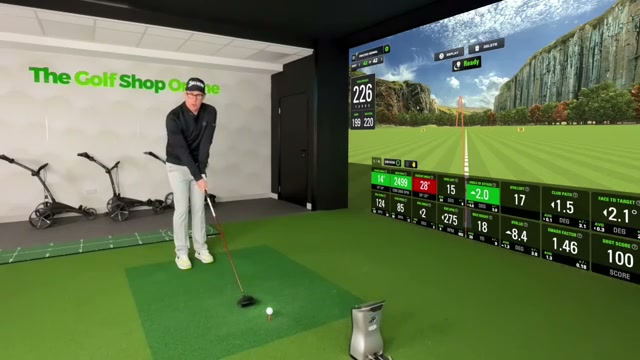
Club fitting should extend beyond flat range conditions to include testing in various simulated course situations (e.g., shots over hazards, into greens) to accurately assess real-world performance.
為什麼這樣做
A golfer's natural tendencies and a club's inherent design biases become more apparent and impactful in diverse on-course scenarios. Standard flat range testing might show similar performance, but situational testing reveals how clubs truly perform when golfers attempt specific shot outcomes, helping them choose clubs that complement their skills.
怎麼做
- 1When getting fitted or practicing, ask to simulate shots from different course scenarios (e.g., long approaches to greens, shots needing to carry bunkers).
- 2Pay attention to how your natural swing interacts with each club in these situations.
- 3Observe launch, spin, and descent angles to see if the club helps you achieve the desired shot outcome.
You'll be amazed how much amateurs react differently in different scenarios. In one test, hybrid showed significantly better dynamic loft, attack angle, launch, spin, and descent angle than a UI when *trying* to hit a high shot, while showing similar results on flat range. This demonstrates the critical role of situational context.